When it comes to choosing dates, two popular varieties often come to mind: Medjool and Deglet Noor dates. Both varieties are highly sought after for their natural sweetness and health benefits, but there are notable differences that set them apart. In this article, we’ll take an in-depth look at Medjool dates vs Deglet Noor dates, examining their origins, taste, texture, health benefits, and ideal uses.
What are Medjool Dates?
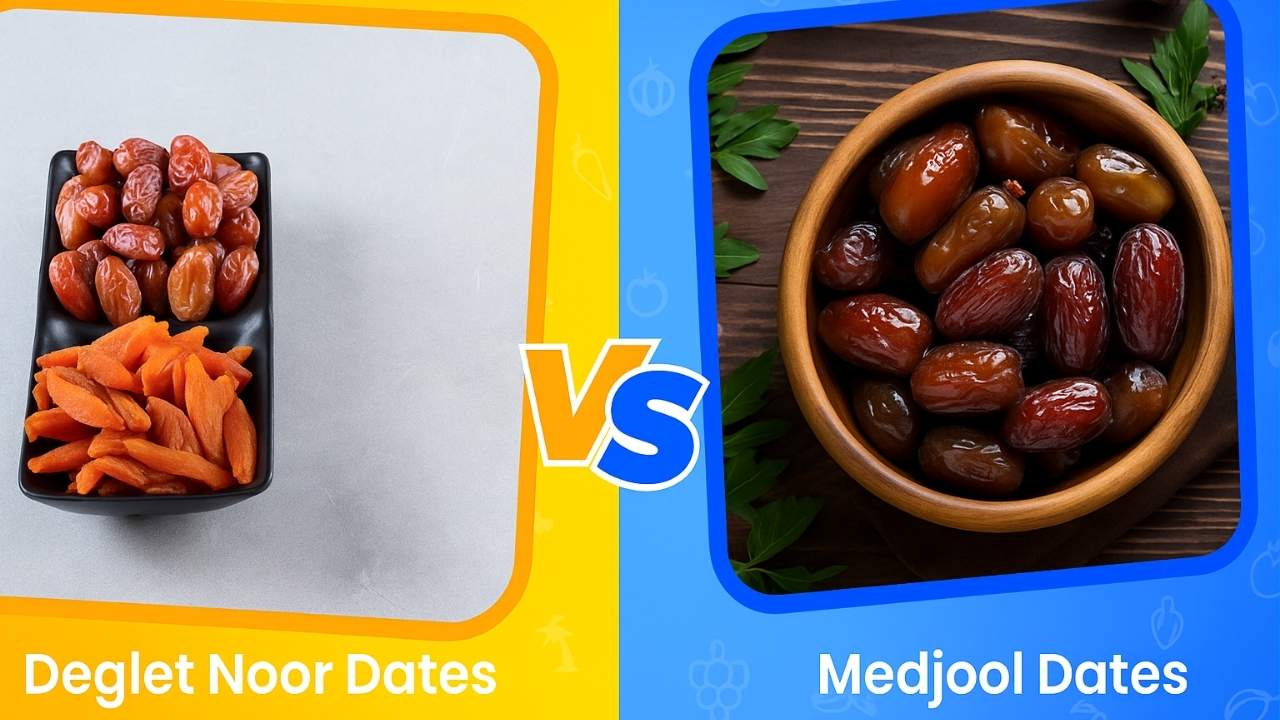
Medjool dates’ big size, rich flavor, and soft texture have earned them the nickname “king of dates.”. Farmers first cultivated these dates in Morocco, but they now grow them in various regions, including the Middle East and California. People recognize Medjool dates for their deep brown color and chewy, soft texture, which makes them a popular choice for snacking and baking. These dates have a natural sweetness that is perfect for anyone looking to satisfy their sweet tooth without refined sugar.
The Medjool date is larger than most other varieties, often reaching up to 2 inches in length. They are particularly rich in nutrients, including potassium, magnesium, and fiber. Many people prefer Medjool dates for their superior taste and texture, as they are not only sweet but also juicy and moist. This variety of date is perfect for those who enjoy a satisfying, hearty bite.
What are Deglet Noor Dates?
Deglet Noor dates, often referred to as the “queen of dates,” are smaller and firmer than Medjool dates. They are commonly grown in Tunisia, Algeria, and parts of California. Unlike Medjool dates, Deglet Noor dates have a golden or light brown color and a firmer, drier texture. These dates are often described as having a delicate sweetness, making them ideal for those who prefer a more subtle, less intense flavor.
Deglet Noor dates are smaller, about 1 inch in length, and have a slightly fibrous texture compared to the Medjool variety. While they are not as juicy or soft, they have a crisp bite that many people enjoy. Cooks use firm Deglet Noor dates in salads, granola bars, and dessert toppings because they hold their shape well.
Medjool Dates vs Deglet Noor Dates: Taste and Texture Comparison
One of the most significant differences between Medjool and Deglet Noor dates is their taste and texture. Medjool dates have a rich, caramel-like flavor that is incredibly sweet and smooth. The soft, juicy texture adds to the indulgence, making them perfect for those who enjoy a soft, melt-in-your-mouth treat. The sweetness of Medjool dates is intense, which is why they are often used as a natural sugar substitute in baking and cooking.
On the other hand, Deglet Noor dates have a milder, less intense sweetness. The flavor is often described as light and subtly sweet, with a slightly nutty undertone. Their firm texture makes them less chewy than Medjool dates and offers a more satisfying crunch. While they may not have the same juicy, indulgent texture as Medjool dates, they are still incredibly versatile and can add a delightful bite to various dishes.
Nutritional Differences Between Medjool and Deglet Noor Dates
When comparing the nutritional content of Medjool dates and Deglet Noor dates, both types of dates offer a range of health benefits, but there are some differences. Medjool dates are rich in fiber, potassium, magnesium, and antioxidants, making them an excellent choice for promoting digestive health and maintaining healthy blood pressure levels. A single Medjool date contains about 66 calories, 18 grams of carbohydrates, and 1.6 grams of fiber.
Deglet Noor dates, though slightly lower in calories (about 20 calories per date), still provide a decent amount of essential nutrients. They contain around 5 grams of sugar and 2 grams of fiber per date, making them a good option for those looking for a lighter date. While they offer a healthy dose of potassium and magnesium, they have a slightly lower antioxidant content than Medjool dates.
Both types of dates are also known for their high glycemic index (GI), meaning they can cause a rapid increase in blood sugar levels. However, the fiber content in both varieties can help slow down the absorption of sugar, making them a healthy treat when consumed in moderation.
Ideal Uses for Medjool Dates
Medjool dates are incredibly versatile and can be used in a variety of dishes. Due to their soft and juicy texture, they are ideal for snacking or eating on their own as a quick energy boost. Bakers and home cooks frequently use Medjool dates in desserts such as energy bars, cakes, and smoothies. They blend these dates into creamy dips, stuff them with nuts or cheese, and use them as a natural sweetener in baked goods.
Their rich, caramel-like sweetness makes them a perfect addition to savory dishes as well. Cooks use Medjool dates to balance roasted vegetables, enrich tagines, and enhance sauces with depth and complexity. Whether eaten on their own or incorporated into a recipe, Medjool dates provide a unique burst of sweetness and moisture.
Ideal Uses for Deglet Noor Dates
Cooks prefer Deglet Noor dates for dishes that require a firmer, more solid texture. They commonly add these dates to salads, granola bars, and baked goods because the dates maintain their shape and texture well during cooking. They are also great as a topping for cereals, yogurt, or oatmeal, adding a pleasant sweetness without overwhelming the dish.
Cooks often use Deglet Noor dates in savory dishes, especially in Middle Eastern and Mediterranean cuisine. Their milder sweetness pairs well with meats like lamb and chicken, and chefs use them to complement spices and herbs in couscous or pilaf dishes. People also stuff them with cheese, nuts, or even prosciutto to create elegant appetizers for parties.
Medjool Dates vs Deglet Noor Dates: Which One Should You Choose?
The choice between Medjool dates and Deglet Noor dates ultimately depends on your personal preferences and the intended use. If you are looking for a rich, indulgent date with a soft texture and intense sweetness, Medjool dates are the better choice. They are perfect for snacking, baking, or adding natural sweetness to recipes.
However, if you prefer a firmer date with a more delicate sweetness, Deglet Noor dates may be the ideal option. Their firm bite adds texture to salads, granola bars, and savory dishes, making them perfect for these recipes.
Health Benefits of Medjool Dates and Deglet Noor Dates
Both Medjool and Deglet Noor dates offer several health benefits. They are an excellent source of dietary fiber, which aids in digestion and helps maintain a healthy gut. Dates are also rich in essential minerals such as potassium, magnesium, and copper, which support heart health, bone strength, and overall well-being.
In addition, the antioxidants in dates actively reduce inflammation and protect the body against oxidative stress. Antioxidants in Medjool dates actively fight free radicals in the body, promoting healthier skin and better immune function.
Conclusion: Medjool Dates vs Deglet Noor Dates
In the Medjool dates vs Deglet Noor dates debate, it’s clear that both varieties have their own unique qualities and benefits. Medjool dates are larger, softer, and sweeter, making them ideal for those who prefer a more indulgent treat. On the other hand, Deglet Noor dates offer a firmer texture and a milder sweetness, making them better suited for those who prefer a lighter date or need dates that hold their shape during cooking.
Ultimately, the choice between Medjool and Deglet Noor dates depends on your taste preferences and the type of recipe you are preparing. Whether you choose the luxurious Medjool date or the firm, subtly sweet Deglet Noor date, both varieties are a delicious and nutritious addition to your diet.