
Few drinks feel as refreshing and timeless as a glass of freshly made lemonade. A pure lemonade juice blend focuses on the natural brightness of citrus, combining freshly squeezed lemon juice with water and a touch of sweetness to create a balanced, vibrant drink. Unlike overly sweet commercial versions, this homemade approach highlights the clean, tangy flavor of real lemons.
In kitchens around the world, lemonade has long been appreciated for its simplicity and versatility. It can be a cooling afternoon drink, a welcome addition to a family gathering, or a light companion to summer meals. The beauty of a pure lemonade juice blend lies in its flexibility—you can adjust sweetness, acidity, and even texture to suit your taste.
People who enjoy fresh, homemade beverages often gravitate toward lemonade because it requires minimal ingredients and preparation. It’s especially appealing to home cooks who value natural flavors and seasonal ingredients. In my kitchen, I often make a small batch in the afternoon, letting the lemon aroma fill the room while it chills in the refrigerator.
This guide explores how to make a balanced, flavorful lemonade blend at home, along with tips for choosing ingredients, storing leftovers, and adapting the drink for different seasons.

What Is Pure Lemonade Juice Blend?
A pure lemonade juice blend is a simple beverage made primarily from freshly squeezed lemon juice, water, and a natural sweetener such as sugar or honey. The goal is to preserve the authentic flavor of citrus without artificial additives or excessive sweetness.
Key Ingredients
The classic blend typically includes:
- Fresh lemon juice
- Cold water
- A sweetener (granulated sugar, honey, or simple syrup)
Optional ingredients may include:
- Lemon zest for stronger citrus aroma
- Mint leaves for freshness
- Sparkling water for a lighter texture
Culinary Background
Lemonade has a long culinary history, with variations appearing in many cultures. Early forms of lemon-based drinks were enjoyed in parts of the Middle East and Mediterranean regions, where citrus fruits thrived. Over time, the drink evolved into the chilled, sweet-tart beverage now common in many households.
Flavor Profile
A well-made lemonade blend achieves a balance between:
- Bright acidity from lemon juice
- Gentle sweetness from sugar or honey
- Light dilution from water
The result is crisp, refreshing, and slightly tangy without overwhelming the palate.
Traditional Preparation
Traditionally, lemons are squeezed by hand or with a citrus press. The juice is then combined with sweetener and water until the flavors reach a pleasant balance. Some cooks prefer dissolving the sugar first to create a simple syrup, ensuring the sweetness distributes evenly.

Why This Lemonade Hits Just Right
Lemonade may be simple, but its appeal comes from thoughtful flavor balance.
Flavor Harmony
A successful lemonade blend combines several taste elements:
- Acidity: Lemon juice provides brightness and freshness.
- Sweetness: Sugar softens the sharp citrus edge.
- Bitterness: A slight hint from lemon zest adds complexity.
Together, these create a drink that feels refreshing rather than heavy.
Texture and Mouthfeel
While lemonade is primarily a liquid beverage, texture still plays a role. Fresh juice often contains tiny pulp particles that add body. Some people strain the juice for a smoother finish, while others enjoy the light pulp for a more natural feel.
Nutritional Value
Lemons naturally contain:
- Vitamin C
- Small amounts of potassium
- Antioxidant compounds found in citrus
While lemonade should still be enjoyed in moderation due to added sweeteners, using fresh fruit allows you to control sugar levels.
Everyday Versatility
A pure lemonade juice blend works in many everyday situations:
- Afternoon refreshment
- Light drink alongside grilled meals
- Non-alcoholic option for gatherings
- Hydrating beverage during warm weather
Its simplicity makes it easy to prepare in both small and large batches.
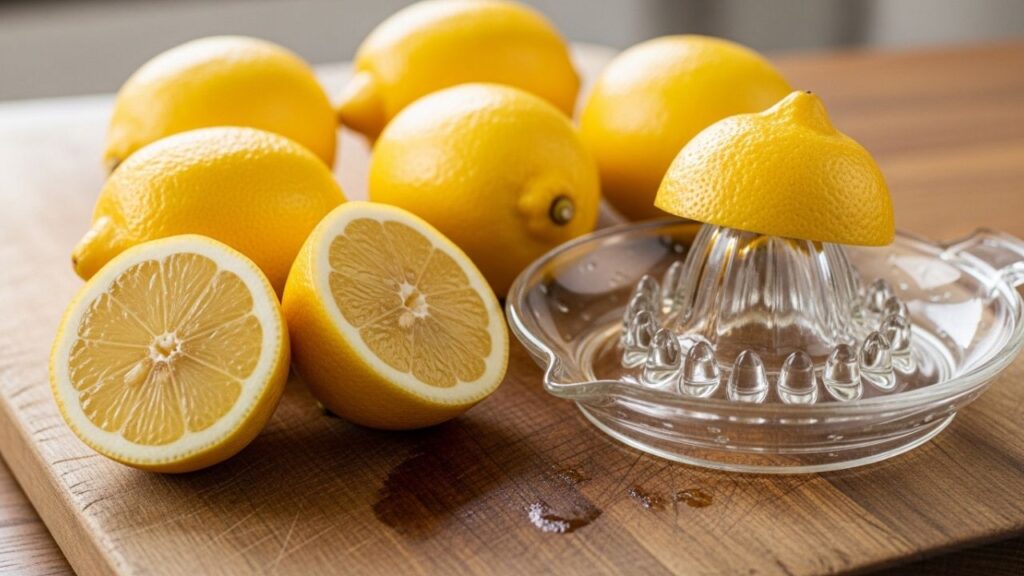
Signature Lemonade Mix
The quality of your lemonade largely depends on the ingredients you choose.
Choosing Fresh Lemons
Look for lemons that are:
- Bright yellow without dull spots
- Slightly soft when gently squeezed
- Heavy for their size, indicating more juice
Thin-skinned lemons usually produce more juice than thick-skinned ones.
Sweetener Options
Traditional lemonade uses granulated sugar, but other options work well:
- Honey: Adds floral sweetness
- Maple syrup: Provides mild caramel notes
- Simple syrup: Dissolves quickly for smooth sweetness
Ingredient Substitutions
If lemons are limited, you can experiment with:
- Lime juice for a sharper citrus taste
- A blend of lemon and orange juice for mild sweetness
- Agave syrup instead of sugar
Seasonal Considerations
Lemons are available year-round, but their flavor may vary slightly depending on season and growing region. Winter lemons sometimes taste slightly more acidic, which may require a little extra sweetener.
Budget-Friendly Tips
To stretch ingredients:
- Roll lemons firmly before juicing to extract more liquid
- Add a small amount of lemon zest to intensify flavor
- Use filtered water to keep the taste clean
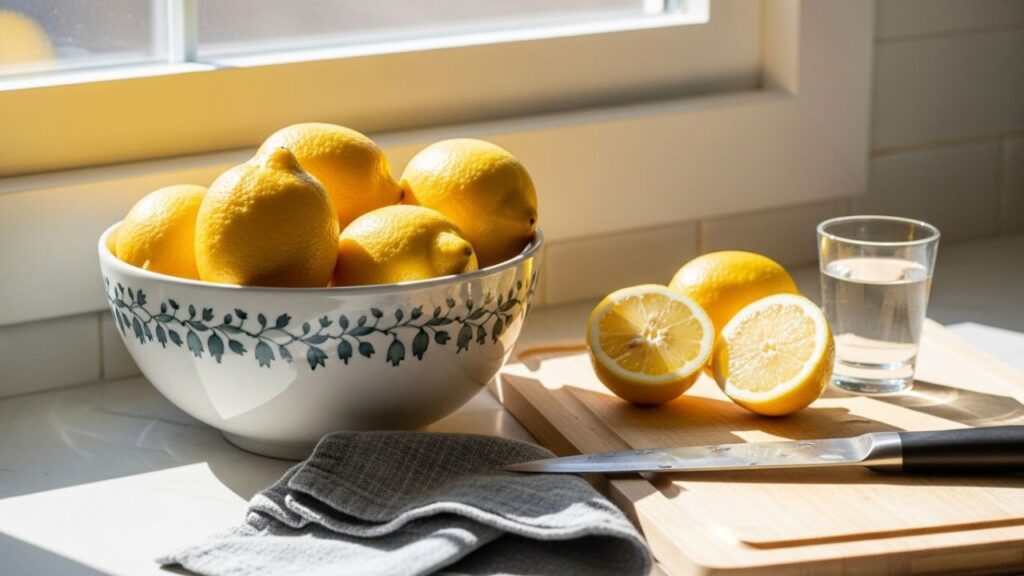
Crafting the Perfect Lemonade Method
Making a pure lemonade juice blend is straightforward, but attention to detail ensures the best flavor.
1. Prepare the Lemons
Wash 5–6 fresh lemons thoroughly. Roll them gently on the counter to loosen the juice.
Cut them in half and squeeze using a citrus press or juicer.
You should get about 1 cup of fresh lemon juice.
2. Make a Simple Syrup (Optional but Recommended)
Combine:
- ½ cup sugar
- ½ cup water
Heat gently until the sugar dissolves. Allow it to cool before using.
This step prevents a gritty texture in the finished lemonade.
3. Combine the Ingredients
In a pitcher, mix:
- 1 cup lemon juice
- 3–4 cups cold water
- ½ cup simple syrup (adjust to taste)
Stir thoroughly.
4. Taste and Adjust
Good lemonade should taste bright but not overly sharp. If needed:
- Add more water for mildness
- Add more syrup for sweetness
- Add extra lemon juice for stronger citrus flavor
5. Chill Before Serving
Refrigerate for at least 30 minutes. Chilling allows the flavors to blend together.
Optional Variations
- Add fresh mint leaves
- Stir in sparkling water just before serving
- Infuse with sliced strawberries or cucumber

How to Serve Lemonade Juice Blend
A pure lemonade juice blend pairs well with many foods and occasions.
Ideal Pairings
Consider serving lemonade with:
- Grilled vegetables or light salads
- Roasted chicken or seafood dishes
- Fresh fruit desserts
Plating and Presentation
For an appealing presentation:
- Serve in clear glasses to highlight the pale yellow color
- Garnish with lemon slices or herbs
- Add ice cubes for extra chill
Serving for Gatherings
For larger gatherings:
- Prepare a large pitcher or beverage dispenser
- Offer sliced fruit garnishes on the side
- Keep extra ice nearby so guests can adjust their drinks
Portion Tips
For smaller households, make a half batch to maintain freshness. Lemonade tastes best within a day or two of preparation.

How Lemonade Juice Blend Changes by Season & Occasion
Lemonade adapts beautifully to seasonal ingredients.
Spring and Summer
- Add fresh berries for color and sweetness
- Blend with crushed ice for a frozen version
- Include mint or basil for herbal notes
Fall and Winter
- Warm the lemonade gently with a little honey
- Add ginger slices for warmth
- Mix with orange juice for deeper citrus flavor
Holiday Adaptations
For festive occasions:
- Serve in decorative pitchers
- Add thin citrus slices for visual appeal
- Pair with light desserts or pastries
Refreshing Leftovers
Leftover lemonade can be transformed into:
- Lemon ice cubes for future drinks
- Popsicles
- A citrus base for fruit punches
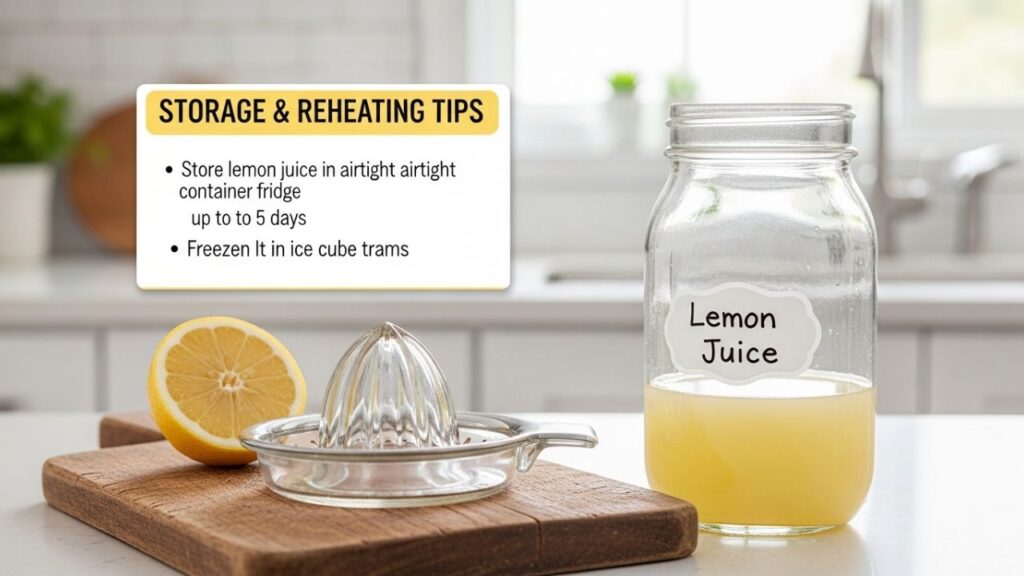
How to Store and Reheat Lemonade Juice Blend
Although lemonade is best enjoyed fresh, proper storage helps maintain its flavor.
1. Refrigeration
Store lemonade in a sealed glass pitcher or bottle in the refrigerator.
It typically stays fresh for 2–3 days.
2. Freezing
Lemonade can be frozen in airtight containers or ice cube trays. Frozen cubes are useful for flavoring water or iced tea.
3. Reheating
Lemonade is generally served cold, but if you prefer a warm citrus drink, heat gently on the stove without boiling.
4. Food Safety Tips
Always refrigerate lemonade promptly, especially if it contains fresh fruit additions.
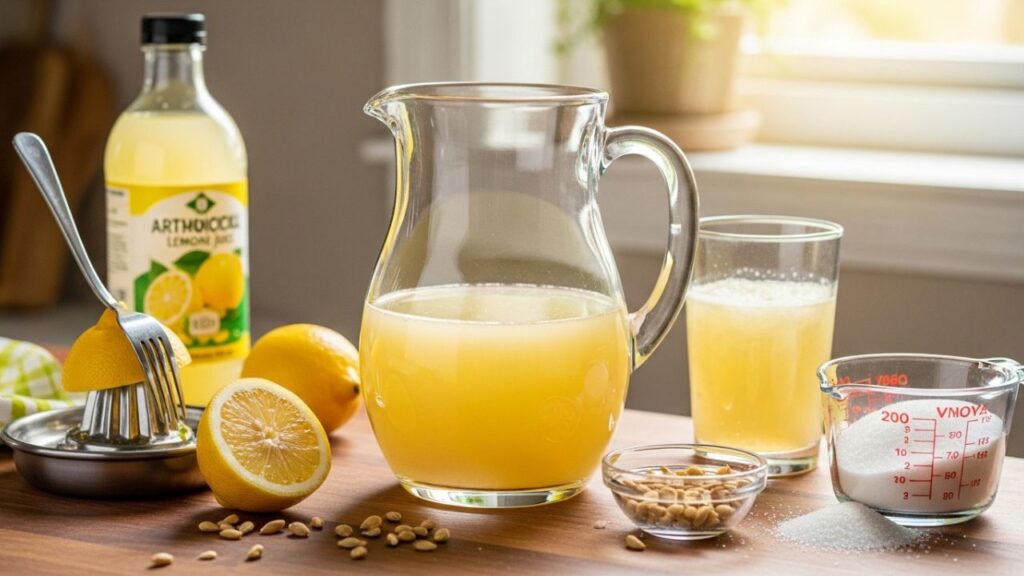
What to Avoid When Making Lemonade Juice Blend
Even simple recipes can go wrong if a few details are overlooked.
1. Using Bottled Lemon Juice
Fresh lemons provide brighter flavor and aroma.
2. Too Much Sugar
Excess sweetness can mask the natural citrus taste.
3. Not Dissolving Sugar Properly
Granulated sugar may settle at the bottom if not fully dissolved.
4. Over-Diluting the Drink
Adding too much water weakens the flavor balance.
5. Skipping the Taste Test
Every batch of lemons differs slightly, so always taste and adjust before serving.
Frequently Asked Questions
1. Can I make lemonade without sugar?
Yes. Honey, maple syrup, or natural fruit sweeteners can replace sugar while still balancing the acidity of lemon juice.
2. How many lemons are needed for one pitcher?
Most pitchers require about 5–6 medium lemons to produce one cup of juice.
3. Is it better to strain lemon pulp?
That depends on personal preference. Straining produces smoother lemonade, while keeping pulp adds natural texture.
4. Can lemonade be made ahead of time?
Yes. Prepare it a few hours before serving and store it in the refrigerator to allow flavors to blend.
5. Why does my lemonade taste bitter?
Bitterness can occur if too much lemon rind or white pith gets into the juice. Straining the juice usually solves this issue.
6. Can sparkling water be used instead of still water?
Absolutely. Adding sparkling water just before serving creates a light, bubbly variation.
Conclusion
A pure lemonade juice blend demonstrates how a few simple ingredients can create a drink that feels both refreshing and timeless. By balancing fresh lemon juice, water, and gentle sweetness, you can produce a beverage that highlights natural citrus flavor without unnecessary additives.
Preparing lemonade at home also allows you to adapt the drink to your taste. Some prefer a sharper citrus profile, while others enjoy a slightly sweeter blend. Either way, the process encourages mindful cooking and appreciation for fresh ingredients.
Whether served on a warm afternoon, shared at a gathering, or simply enjoyed with a meal, homemade lemonade brings a sense of ease and brightness to the table.
About the Author
The author is a home cook and food enthusiast who enjoys exploring simple recipes that highlight fresh ingredients and practical cooking techniques. With a focus on approachable meals and thoughtful flavor balance, they share guides designed to help readers feel comfortable and confident in the kitchen. Their writing reflects everyday cooking experiences and a genuine appreciation for seasonal foods.